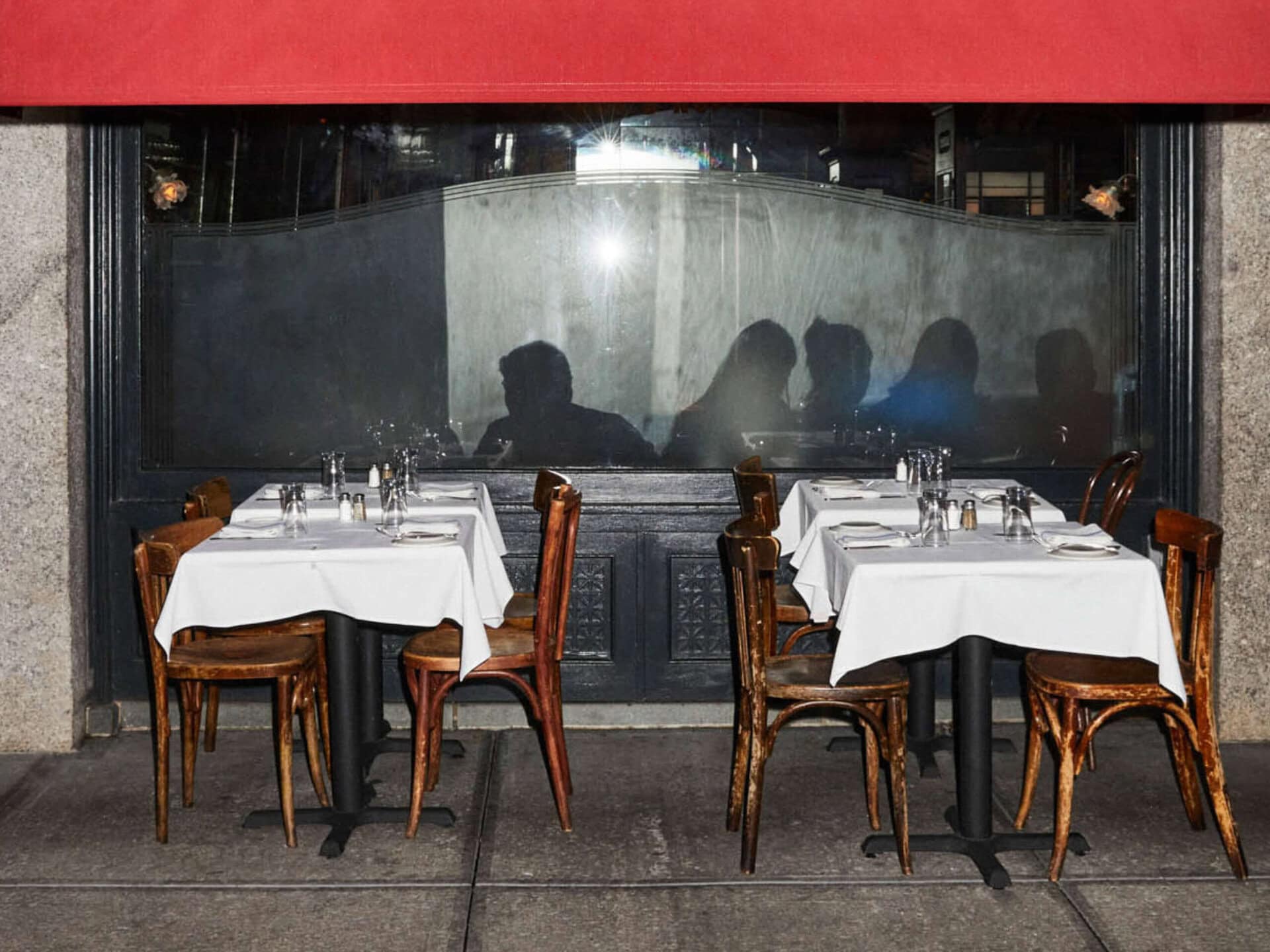
Aside from the MTA and slow walking tourists, few gripes unite New Yorkers like the song, dance, and sheer luck required to get a reservation not just somewhere, but almost anywhere in the city.
They kvetch on forums like r/FoodNYC, where users obsessively trade tips and populate a spreadsheet tracking the exact times the books open at the city’s most talked-about restaurants; they argue in the comments sections of TikTok videos; and they too often angrily email and DM restaurants on Instagram for tables.
“I can’t quite pinpoint the moment reservations became a competitive sport, but it certainly feels like a post-COVID phenomenon. After months of being confined to our own kitchens, everyone emerged with a kind of pent-up determination never to eat at home again, and overnight every table in town seemed to vanish,” says Cody Pruitt, owner/operator of neo-French bistros Libertine and Chateau Royale.
Taken at face value, the reservation rat race might seem like a one-sided problem. Surely, one thinks, owners must be tickled to turn away people vying to throw $23 at a Negroni and $48 on steak frites.
But for some, the increased gamification of dining out isn’t preferable to building a strong community of loyal regulars. Being the buzzy spot in town for a few months is fun, but it’s not what keeps establishments in business in the long run. That’s why some operators are reconsidering the decision to fully hand over the reservation reins to apps like Resy, OpenTable, and SevenRooms, which have, despite their best efforts, become popular targets for reservation resellers and bots.
“It’s hard for any reservation platform to distill how dynamic human beings are into its code. We run late, we show up early, we decrease in party size, or even double with no notice,” says Amy Zhou, partner and VP of operations at Gracious Hospitality Management, which uses Resy to manage reservations across its Miami, Las Vegas, and New York City establishments, including COTE and Coqodaq. “There are limits to how adaptable our systems are at capturing the beautiful messes we humans are, and so to that end, we can’t rely on technology entirely to ‘maximize’ our books.”
Zhou believes that as more reservations are managed via online inventory, tables will only become harder to come by. “There seems to be less and less human intervention in the book-building process,” she says. It’s more efficient in some ways, but mostly you lose the human touch of an experienced maitre d’ knowing when to apply pressure or intelligently overbook.”
Pruitt’s restaurants also rely on Resy, which he calls his “clear favorite” among the booking apps for its functionality and user experience. Even still, he finds himself “playing Tetris” on the back end, relying on an intimate understanding of his dining rooms to coax the availability and flow. “I suppose I’m a touch old-fashioned,” he says. “But the art of the maître d’, the perfect plotting of our rooms, conducting the evening, hosting the nightly ‘party”, is something I’m desperate to hang onto, and something I don’t think Resy or any other app is poised to replace.
John Meadow, founder and president of LDV Hospitality, which operates five restaurant concepts in New York City, became so frustrated with the limitations of booking apps that some of his concepts have turned to new technology like ResX and Dorsia, designed to give diners more access to tables—for a price, of course.
“With Dorsia, you know that the money being spent to secure the reservation is going back to the business and its staff, not for commissions or broker fees,” says Marc Lotenberg, Dorsia’s founder and CEO.
Founded in 2021, the platform (named after the mythical restaurant from American Psycho) reserves its members’ tables at over 100 restaurants in New York City, so long as they agree to hit a minimum spend.
“We hate to think about all of the customers paying extra via other platforms to snag a reservation from a bot, or another customer who’s avoiding their cancellation fees, because that money could have gone towards an amazing dining experience or into the pockets of the hardworking servers, bussers, bartenders, and wait staff,” he adds.
Of course, there’s always an increasingly alluring alternative: the walk-in-only restaurant.
“Guests make multiple reservations and last-minute cancel or no show, while guests who make the effort to turn up and try to walk in are turned away. We want to uphold a sense of spontaneity that comes from a walk-in only spot,” says Cressida Greening, co-owner of Dolores, a new Mexican spot in Williamsburg. “For us, our decision to forgo reservations has allowed us to prioritize folks who make the effort to come to us. I feel as though having a pre-dinner drink for an hour or so while you wait for a table is much more romantic than being glued to your phone at 8 AM, refreshing reservations two weeks in advance of your date night, trying to get the res drop for the latest hotspot.”
CREDITS
Oset Babür-Winter is a writer, editor, and brand consultant in New York City. She is also the founder of Prix Fixe, the first gifting suite that connects hospitality tastemakers with the best brands in food, beverage, and home.